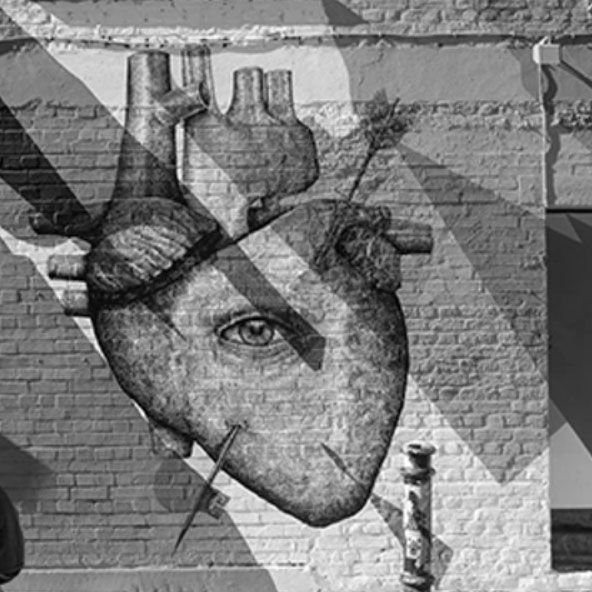


On fear and anger.
date. 2022 may 8
place. Oxford (body) where I grew up (mind)
What is the nature of, differences and similarities between fear and anger? Written with unhuman covid policies in mind.
Fear and anger are such prolific emotions, often used, but seldom reflected on. What do we mean by them? What do they imply for our evaluation of reality. If emotions are our reactions to the world, then they must, in their nuance, reflect our perception of the reality they respond to. Being both commonly used and motivationally powerful, the emotions of fear and anger deserves closer inspection.
What are we scared and fearful of? What are we angry about?
We are scared and fearful of our parents’ looming old age, of the influence social media has on our children’s development, we are afraid that our significant other may leave us for another. When we are face to face with death, when a beloved is diagnosed with a terminal illness, we are primarily scared. Things we are scared of are things we have no control over, we have no influence over, the result of which lies outside of our powers. We may be angry after we’ve survived the uncertainty, but that is in the aftermath, when things are done, when we no longer feel helpless and hopeless, when we are under the impression that there is the hope of overcoming, and perhaps we have overcame. To be clear, some of us are angry about terminal illnesses, some of us curse at the world, curse at God, we damn the world and the heavens. These people are hopeful, they believe, at least in some, perhaps twisted way, that the despair they are in is not entirely without hope, that there is still a way out, a way that is barred by some force and some being and that that force and that being can be influenced, by us of all people. They are, thus, not entirely in despair. They are not entirely hopeless. They think, in some way, perhaps even subconsciously that we can still amend things and resist the terminance of this outcome. When we are scared is when we realise we are helpless, in the sense that there is nothing I can do to help my situation. There may something someone can do about it, some elusive one perhaps, God perhaps, but we believe there is no guarantee or indeed hope of help. There is no optimism on the horizon. If we believe in a God that can help, we do not believe they will or would be willing to.
What do we get angry about? We get angry at our friends. We get angry at our spouses. We get angry at the ourselves. There is anger in heated arguments, among protesting people that have taken to the streets. The anger is audible and visible in the shouts, the raised arms and the fuming of action. We are only angry about things we have some control and influence over. We are angry because we know how things should be and that they are anything but so. We are angry because we see a possible world in which things are different and a potential in righting these wrongs. Anger presupposes a view of what is right and wrong (either objectively true or treated as objectively true by the perceived), the anticipation that what is right is possible and the belief that what is possible is within our reach. If you are angry that means you are hopeful. You subconsciously think this thing is within your power of control.
Anger is a hopeful emotion, it aims at productivity, it aims at improvement, its telos is action and motivation. Anger is a positive emotion.
These are of course points about perception, not about reality. We are only angry about things we (perceive) to be changeable and influenceable by us. We are only scared and fearful of things that we (perceive) to be unchangeable and un-influenceable by us. But our perception may not and often do not reflect the truth. We are sometimes angry about the weather. We are sometimes fearful of the person we will become. These are irrational reactions because we cannot control the weather and we do have some significant control over the person we will become.
Anger and fear are of course not mutually exclusive. We can be both angry and fearful just as many things are both not entirely within or without our control. We can choose to act in fear or anger. This much choice and control we have.
What does this mean practically? Inspect and observe what you are angry about and what you are scared of. Notice that you are only angry about things that you perceive to have control over. Notice that you are only fearful of things that you perceive to have no control over. If you are angry about something, then it would mean you think you have control over that thing. If you are fearful of something, then that means you think you have no control over that thing. But does your perception match up with reality? Sometimes we are so caught up with a way of reacting that we don’t pause and think whether our emotional responses are rational (yes, i do think emotions can be rational or irrational): Whether what we perceive to be under our control really is so and whether we should be angry about it. Or rather perhaps we should give up being angry, and go straight into lamenting and grieving, for anger is a taxing emotion to harbour. Is what we perceive to be not under our control really not? Is it really outside the reach of our will and volition? Perhaps we should be angry about it instead? Perhaps we shouldn’t be so hasty in our grieving like we shouldn’t mourn a person that is still under resuscitation.
Fear is an odd sort of grieving. Grieving of the end that (we are convinced that) will come before it comes.
Anger is an odd sort of cheering on.
An angry nation is a hopeful nation. An angry people is a action-ready group of people, they are latent with potential, they are a group waiting and longing for change. A fearful nation is a paralysed nation. A fearful people is crushed in spirit.
In an odd way, I am happy to see my country stirring with anger. I am happy to see my people enraged. We are hopeful people. We are a hopeful nation. The spirit in us have not died. This much is obvious.